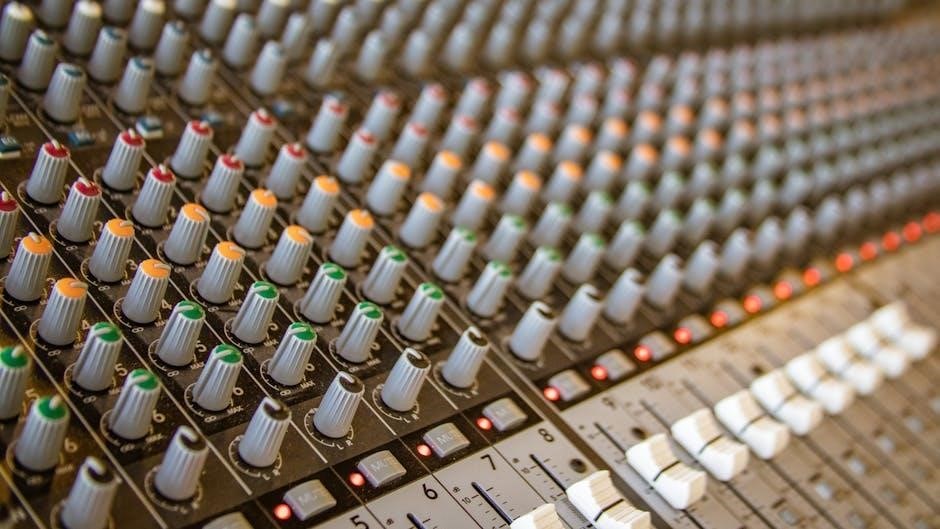
Yamaha TF1 User Manual: An Overview
This manual details the Yamaha TF1’s features, offering guidance on setup, operation, and troubleshooting. Explore diverse applications and unlock the console’s full potential.
The Yamaha TF1 represents a significant advancement in digital mixing console technology, designed for both live sound reinforcement and studio recording applications. This compact, yet powerful, console delivers exceptional audio quality and intuitive operation. It’s built around a TouchFlow Operation interface, streamlining workflow and providing quick access to essential parameters.
The TF1 boasts a high level of flexibility, accommodating a wide range of input sources and output configurations. This manual will guide you through every aspect of the TF1, from initial setup to advanced features, ensuring you harness its full capabilities.
Target Audience for this Manual
This manual is intended for a broad audience, encompassing both experienced audio engineers and those new to digital mixing consoles. It caters to live sound professionals, touring technicians, worship facility staff, recording engineers, and even advanced hobbyists.
No prior in-depth knowledge of the Yamaha TF1 is assumed. The content progresses logically, starting with fundamental concepts and gradually introducing more complex features. Users comfortable with basic audio principles will benefit most, but clear explanations are provided for all levels of expertise.
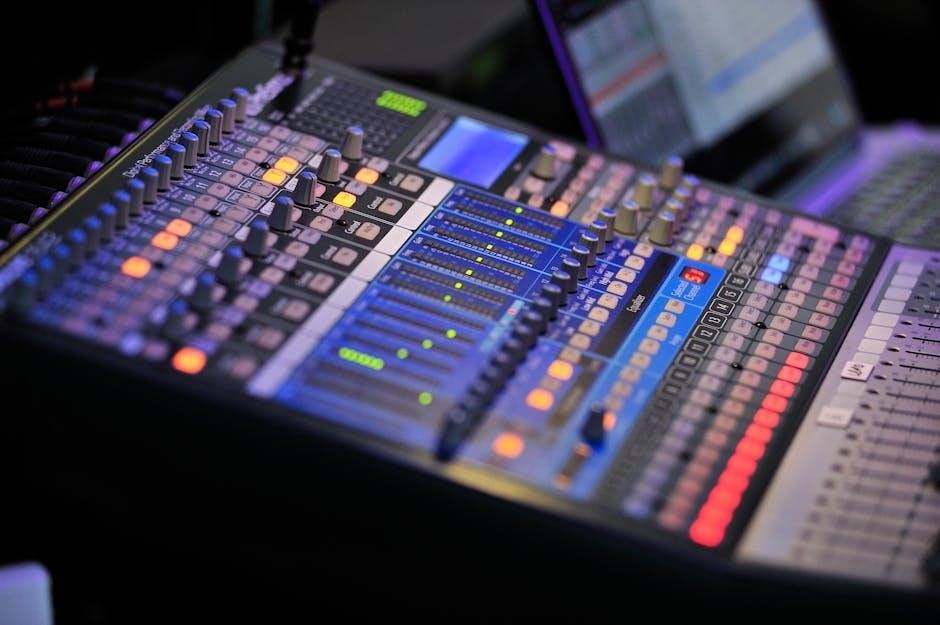
Setting Up Your Yamaha TF1
Proper setup ensures optimal performance. This section guides you through unboxing, power connection, initial configuration, and verifying basic system functionality.
Unboxing and Initial Inspection
Carefully unpack the Yamaha TF1 console and all included accessories. Verify the package contents against the packing list, ensuring all items are present and undamaged. Inspect the console for any visible signs of shipping damage, such as dents, scratches, or broken connectors.
Retain the original packaging for potential future transport or warranty claims. Document any damage with photographs immediately and contact your Yamaha dealer or shipping carrier. Confirm the presence of the power cable, network cable, and any bundled software or documentation.
Connecting Power and Ground
Before powering on the Yamaha TF1, ensure proper grounding is established. Connect the provided power cable to a grounded AC outlet matching the console’s voltage requirements. Verify the outlet is functioning correctly.
Attach the ground wire to a suitable earth ground point to minimize noise and ensure safety. Improper grounding can lead to hum, interference, or even electrical shock. Double-check all connections before applying power. Always use a properly rated power cable and avoid overloading the circuit.
Initial System Configuration
Upon powering up the Yamaha TF1, the initial system configuration wizard will guide you through essential settings. First, select your preferred language and region. Next, configure the date and time accurately for proper event logging and scene recall.
Then, define your input and output routing preferences. This step establishes the basic signal flow. Finally, confirm your network settings if utilizing Dante or remote control features. Save these settings to begin operation.
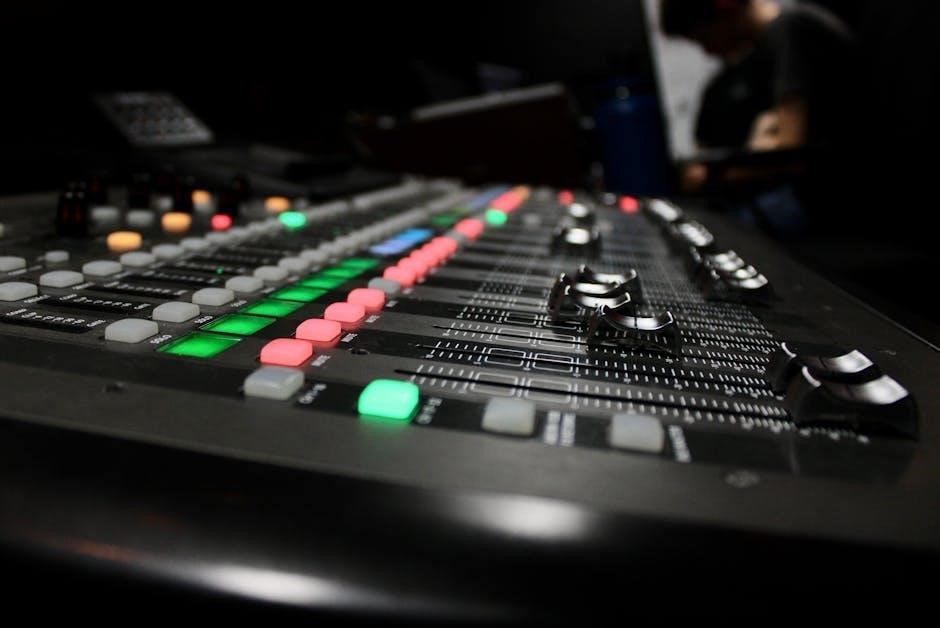
Understanding the TF1 Interface
The TF1 boasts an intuitive interface with a central touchscreen and dedicated encoders. Mastering navigation unlocks powerful control over audio processing and routing features.
Navigating the Main Menu
The TF1’s main menu is accessed via the touchscreen display, providing a centralized hub for all console functions. Users can quickly access sections like Input, Output, EQ, Effects, and Scene Memory.
Intuitive icons and clear labeling simplify navigation. Swiping gestures allow seamless movement between menu pages; The ‘Home’ button instantly returns you to the main screen. Contextual help is readily available, offering detailed explanations of each parameter. Customization options allow users to tailor the menu layout to their workflow, enhancing efficiency and speed.
Understanding the Channel Configuration
The Yamaha TF1 offers flexible channel configuration, accommodating diverse input sources and routing needs. Each channel can be individually assigned an input source, gain level, and phantom power.
Channels can be grouped into mixes, allowing for independent control of levels and processing. The console supports a wide range of input types, including microphones, line-level signals, and digital audio streams. Detailed channel metering provides visual feedback on signal levels, preventing clipping and distortion. Users can easily adjust pan, EQ, and dynamics on a per-channel basis.
Exploring the Scene Memory Functions
The Yamaha TF1’s Scene Memory functions are crucial for efficient setup and recall of complex configurations. Scenes store all console settings, including channel assignments, EQ, dynamics, effects, and routing.
Users can save multiple scenes for different events or songs, instantly recalling preferred settings. Scene recall is fast and reliable, minimizing downtime during performances. The TF1 allows for selective recall, enabling users to load specific parameters from different scenes. This feature streamlines workflow and enhances live sound operation.
Input and Output Management
Configure input channels, set up output buses, and utilize the matrix mixer for flexible routing. Optimize signal flow for diverse audio applications.
Configuring Input Channels
Input channel configuration is central to the TF1’s operation. Begin by selecting the appropriate input source for each channel – analog, digital, or network audio. Adjust gain staging carefully to optimize signal-to-noise ratio and prevent clipping. Utilize the channel’s high-pass filter to remove unwanted low-frequency rumble.
Explore the 48V phantom power option for condenser microphones. Assign channels to input buses for flexible routing. The TF1 allows detailed control over channel EQ, dynamics, and effects, enabling precise sound shaping. Remember to label each channel clearly for easy identification during live performance or recording sessions.
Setting Up Output Buses
The Yamaha TF1 offers flexible output bus configuration for diverse applications. Define main outputs for front-of-house speakers, monitor sends for performers, and auxiliary buses for effects or recording. Assign input channels to these buses using the matrix mixer for precise control over signal routing.
Adjust bus levels and panning to create a balanced mix. Utilize the bus compression feature to control dynamics and enhance clarity. Remember to properly label each output bus for easy identification and recall within scene memories. Careful bus setup is crucial for achieving a professional sound.
Utilizing the Matrix Mixer
The TF1’s matrix mixer provides unparalleled flexibility in routing audio signals. Send any input channel to any combination of output buses, creating complex mixes with ease. This allows for customized monitor mixes, effect sends, and zone control. Adjust levels precisely for each send, ensuring optimal signal distribution.
Utilize the matrix mixer to create dedicated mixes for recording, streaming, or broadcast. Save matrix configurations within scene memories for quick recall. Mastering the matrix mixer unlocks the TF1’s full potential for sophisticated audio routing.
Digital Signal Processing (DSP)
The TF1’s DSP offers powerful tools for shaping your sound. Explore EQ, compression, reverb, and delay effects to enhance and refine audio signals effectively.
Applying EQ to Channels
The Yamaha TF1 provides comprehensive equalization capabilities for each input channel. Users can precisely sculpt the tonal characteristics of individual sources using a 4-band parametric EQ. This allows for detailed adjustments to frequency response, addressing issues like muddiness or harshness.
Each band features adjustable gain, frequency, and Q-factor controls, offering a high degree of flexibility. Furthermore, the TF1 includes high-pass and low-pass filters for additional shaping. Presets and user-defined EQ settings can be saved and recalled via scene memory, streamlining workflow and ensuring consistent sound across performances or events. Mastering EQ is crucial for a polished mix.
Using Compression and Limiting
The Yamaha TF1’s dynamics processing section offers robust compression and limiting tools for each channel. Compression reduces the dynamic range, creating a more consistent level and adding punch. Limiting prevents signals from exceeding a set threshold, protecting downstream equipment and ensuring clarity.
The TF1 provides various compressor types, including comp, limiter, and gate, each with adjustable parameters like threshold, ratio, attack, and release. These controls allow users to tailor the compression to specific sources. Sidechaining is also supported for creative effects. Proper use of dynamics enhances mix clarity and impact.
Exploring the Reverb and Delay Effects
The Yamaha TF1 features a suite of high-quality reverb and delay effects to enhance your mixes. Reverb adds a sense of space and depth, simulating acoustic environments ranging from small rooms to large halls. Delay creates echoes, offering rhythmic and textural possibilities.
The TF1’s effects include various reverb algorithms like hall, plate, and room, alongside delay types such as standard, tape, and modulated. Each effect offers adjustable parameters like decay time, pre-delay, and feedback. These tools allow for creative sound design and polishing of individual tracks or the entire mix.
Advanced Features
Unlock the TF1’s full potential with Dante networking, remote control options, and streamlined firmware updates for optimal performance and future-proof operation.
Dante Network Integration
The Yamaha TF1 seamlessly integrates with Dante networks, enabling multi-channel audio transmission with low latency and high reliability. This allows for flexible system configurations, distributing audio to various locations with ease. Utilize existing network infrastructure, reducing cabling costs and complexity. Dante provides robust control and monitoring capabilities, ensuring stable and efficient audio routing.
Configure Dante channels directly from the TF1’s interface, simplifying network management. Benefit from Dante’s scalability, expanding your system as needed. Explore advanced features like Dante Domain Manager for enhanced network security and control.
Remote Control Operation
The Yamaha TF1 offers comprehensive remote control capabilities via dedicated software and web-based browsers. Control mixing parameters, scene recall, and monitor levels from a computer or tablet. This facilitates front-of-house and monitor engineering from various locations within the venue. Utilize the TF Editor software for detailed control and offline editing.
Web-based remote control provides convenient access without software installation; Customize user interfaces for streamlined operation. Secure remote access ensures protected control of your TF1 console, enhancing workflow efficiency and flexibility.
Firmware Updates and Maintenance
Regular firmware updates are crucial for optimal TF1 performance and access to new features. Download the latest firmware from the Yamaha Pro Audio website and follow the provided instructions for installation via USB. Back up your scene data before updating to prevent data loss.
Routine maintenance includes cleaning the console surface and connectors. Periodically check cable connections for secure fit. Monitor the console’s operating temperature and ensure adequate ventilation. Proper care extends the lifespan and reliability of your Yamaha TF1.
Troubleshooting Common Issues
This section addresses frequent problems like audio loss, Dante connectivity failures, and system instability. Solutions and diagnostic steps are provided for quick resolution.
No Audio Output
If experiencing no audio, first verify the physical connections of all input and output cables. Ensure proper gain staging at each channel, checking fader levels and pan positions. Confirm the main output is not muted and the correct output bus is selected.
Inspect the channel on/off switches and verify that phantom power is engaged if using condenser microphones. Check routing within the matrix mixer to confirm signals are being sent to the desired outputs. Finally, review the scene memory settings to rule out any accidental mutes or incorrect configurations.
Dante Connection Problems
Troubleshooting Dante connectivity begins with verifying network settings on both the TF1 and the connected device. Confirm IP addresses are within the same subnet and that the Dante Controller software recognizes all devices. Check physical network cable connections and ensure proper network switch configuration.
Examine Dante clock synchronization status; timing issues can disrupt audio transmission. Review device permissions within Dante Controller and verify firewall settings aren’t blocking Dante communication. A reboot of both the TF1 and network devices can often resolve intermittent connection issues.
System Freezing or Crashing
If the TF1 freezes or crashes, the first step is a simple reboot – power cycle the console. If the issue persists, check for firmware updates via Yamaha’s website, as these often contain bug fixes and performance improvements. Excessive scene memory usage or complex routing configurations can strain the system.
Avoid rapidly switching scenes or applying numerous DSP changes simultaneously. Ensure adequate ventilation to prevent overheating. If crashes continue, contact Yamaha support, providing detailed information about the circumstances surrounding the failure.
Yamaha TF1 Specifications
Detailed specifications encompass physical dimensions, weight, power requirements, and crucial audio performance metrics like frequency response and Total Harmonic Distortion + Noise (THD+N).
Physical Dimensions and Weight
The Yamaha TF1 console is designed for portability and efficient rack integration. Its compact footprint measures approximately 369.8 mm (14.56 inches) in width, 294 mm (11.57 inches) in depth, and 128.6 mm (5.07 inches) in height.
Crucially, the unit’s weight is around 5.8 kg (12.79 lbs), making it manageable for transport and setup in various live sound and studio environments. These dimensions and weight contribute to its versatility, allowing for flexible placement and integration within existing setups.
Power Requirements
The Yamaha TF1 mixer operates on a standard AC power supply. It’s designed to function optimally with a voltage range of 100-240V, 50/60Hz, ensuring compatibility across various regions. The power consumption is rated at 30W, making it relatively energy-efficient for its capabilities.
Always utilize the provided power cable and ensure a properly grounded outlet is used. Avoid using extension cords or power strips that may not provide sufficient power or grounding. Proper power connection is vital for safe and reliable operation of the TF1 console.
Audio Specifications (Frequency Response, THD+N)
The Yamaha TF1 boasts a frequency response of 20Hz – 20kHz, providing a wide dynamic range for accurate audio reproduction. Total Harmonic Distortion plus Noise (THD+N) is rated at less than 0.005%, ensuring a clean and clear signal with minimal distortion.
The signal-to-noise ratio exceeds 100dB, contributing to a high-quality audio experience. These specifications demonstrate the TF1’s commitment to delivering professional-grade audio performance for live sound and recording applications.
Safety Precautions
Always follow general safety guidelines when operating the TF1. Ensure proper power supply connections and handle the equipment with care during transport and storage.
General Safety Guidelines
Prioritize safety during TF1 operation. Avoid operating the console in damp or wet environments to prevent electrical shock. Ensure adequate ventilation to prevent overheating. Do not attempt to disassemble or modify the unit beyond what is described in this manual.
Always disconnect the power cord before cleaning. Use a soft, dry cloth for cleaning; avoid harsh chemicals. Keep the console away from flammable materials. Regularly inspect cables for damage and replace them if necessary.
Follow all local safety regulations and guidelines. Improper use can lead to damage or injury.
Power Supply Safety
Ensure proper power supply connection for safe TF1 operation. Only use the specified power cord and voltage as indicated on the unit’s rear panel. Never connect to a voltage source exceeding the specified range. Avoid using extension cords or power strips if possible; if necessary, ensure they are adequately rated.
Ground the console properly to prevent electrical shock. Do not operate with a damaged power cord; replace it immediately.
Always disconnect the power before servicing or moving the console. Avoid placing the power cord where it could be stepped on or damaged.
Handling and Storage
Exercise caution when handling the Yamaha TF1 to prevent damage. Avoid dropping or subjecting the console to strong impacts. When transporting, use appropriate protective packaging to shield it from vibrations and shocks. Store the TF1 in a clean, dry environment, free from excessive dust, humidity, and temperature fluctuations.
Keep the console away from direct sunlight and heat sources.
When not in use for extended periods, cover the unit to protect it from dust accumulation; Regularly inspect the console for any signs of damage or wear.
Yamaha TF1 Accessories
Enhance your TF1 experience with recommended cables, a rack mount kit, and useful software applications. These accessories optimize functionality and portability.
Recommended Cables and Connectors
For optimal performance with your Yamaha TF1, utilizing high-quality cables is crucial. We recommend shielded XLR cables for microphone and line-level inputs, ensuring minimal noise interference and a clean signal path. High-performance TRS cables are ideal for balanced connections to studio monitors or powered speakers.
Consider Cat5e or Cat6 Ethernet cables for reliable Dante network connectivity, vital for multi-track recording and remote control. USB 2.0 or 3.0 cables are necessary for firmware updates and file transfers. Ensure all connectors are securely fastened to prevent signal loss and maintain a stable connection throughout your audio setup. Proper cabling significantly impacts the overall sound quality and system reliability.
Optional Rack Mount Kit
To seamlessly integrate your Yamaha TF1 into a standard 19-inch equipment rack, an optional rack mount kit is available. This kit typically includes sturdy brackets designed to securely hold the TF1 console within the rack, providing a professional and organized installation.
Installation is straightforward, usually involving screwing the brackets onto the TF1’s chassis. Ensure adequate ventilation around the console when rack-mounted to prevent overheating. The kit enhances portability and protects the console during transport, ideal for touring or frequent setups. Verify compatibility with your specific rack before purchasing.
Available Software and Apps
Yamaha provides several software applications to enhance the functionality of your TF1 mixer. These include TF Editor, a dedicated offline editor for creating and managing scenes, show files, and parameter settings on your computer.
Additionally, the TF Control app offers wireless remote control from iOS and Android devices, allowing adjustments from anywhere in the venue. Further software options may include tools for system management and firmware updates, ensuring your TF1 remains current and optimized. Explore the Yamaha website for the latest downloads and compatibility information.
Yamaha TF1 and A2 License Restrictions
This section is not applicable to the Yamaha TF1 digital mixer; it pertains to motorcycle licensing and power-to-weight ratios, unrelated to audio equipment.
Power-to-Weight Ratio Considerations
This section is irrelevant to the Yamaha TF1 digital mixer. The provided internet excerpts discuss motorcycle A2 license restrictions, specifically relating to a power-to-weight ratio of 0.2kW per kilogram. This applies to motorcycles like the Yamaha MT-125 and Suzuki GSX1100, where engine power and vehicle weight determine compliance with licensing regulations.
The TF1, being an audio console, does not have a power-to-weight ratio in the same context. Its design focuses on audio processing capabilities and portability, not engine performance or road legality. Therefore, these considerations are not applicable to its operation or documentation.
Throttle Restrictions and Compliance
This topic is entirely unrelated to the Yamaha TF1 digital mixer. The provided internet snippets detail discussions about restricting motorcycle engine power to comply with A2 license regulations. Specifically, they mention limiting Yamaha motorcycles to 48 PS (horsepower) to meet the 0.2kW/kg power-to-weight ratio requirement.
The TF1 console has no throttle, engine, or power output restrictions. It’s an audio mixing device. Discussions about motorcycle power limitations and legal compliance are irrelevant to its functionality, setup, or troubleshooting procedures. This section is a misapplication of the provided source material.
Yamaha TF1 Community and Support
Connect with fellow users via online forums and resources. Yamaha support offers contact information and frequently asked questions for assistance.
Online Forums and Resources
Engage with a vibrant community of Yamaha TF1 users through dedicated online forums. These platforms provide a space to exchange knowledge, share experiences, and troubleshoot issues collaboratively. Explore MOTOR-TALK’s Yamaha forum for technical discussions, user tests, and image sharing related to the TF1 and other Yamaha models.
Discover valuable insights from experienced operators and find solutions to common challenges. Additionally, access a wealth of resources, including user-created tutorials, scene files, and configuration templates, to enhance your workflow and maximize the console’s capabilities; These online communities are invaluable for continuous learning and support.
Yamaha Support Contact Information
For direct assistance with your Yamaha TF1, reach out to Yamaha’s dedicated support team. While specific contact details may vary by region, Yamaha’s official website provides comprehensive support resources, including FAQs, knowledge base articles, and downloadable manuals. Locate your local Yamaha Pro Audio representative through the Yamaha website for personalized assistance.
Expect prompt and professional support for technical inquiries, warranty claims, and service requests. Yamaha prioritizes customer satisfaction and strives to provide efficient solutions to ensure a seamless user experience with the TF1 digital mixing console. Explore their online resources first for quick answers.
Frequently Asked Questions (FAQ)
Q: Can the TF1 be controlled remotely? A: Yes, utilizing dedicated software or a web browser interface, remote control operation is fully supported. Q: Is Dante expansion possible? A: Absolutely, the TF1 offers Dante network integration for seamless audio networking. Q: How do I update the firmware? A: Download the latest firmware from Yamaha’s website and follow the provided instructions for a straightforward update process.
Q: What if I experience audio dropouts? A: Check Dante settings and network stability. Consult the troubleshooting section for detailed guidance. Yamaha provides extensive online resources to address common user inquiries and ensure optimal performance.